How to be a good guest
Two Himalayan cultures that look similar from Europe and are not remotely the same on the ground — what to do, what to eat, and what not to photograph.
Nepal & Bhutan
True in both countries
The body has a hierarchy
The head is the most sacred part of the body and the feet the least. Never pat anyone on the head, children included. Never point your soles at a person, an altar or a shrine — tuck your feet under you on a temple floor. Step around someone sitting or lying down, never over them.
Right hand, both hands
The left hand is the toilet hand. Eat, give, receive and gesture with the right. Better still, offer and accept anything of significance with both hands — money, a gift, a cup of tea. It reads as respect from a Thimphu monastery to a Pokhara teashop.
Everything sacred is clockwise
Stupas, chortens, mani walls, prayer wheels, monasteries. Keep the sacred object on your right and spin the wheels clockwise as you pass. At Boudhanath the crowd carries you; at a mani wall on a ridge you will be the only one doing it, and you should still do it.
Shoes and hats off, voices down
Remove shoes and headwear before entering any temple, monastery, dzong or private home. Cover shoulders and knees. Don't touch statues, offerings or religious texts, and never turn your back on an altar for a photograph.
Ask before photographing people
Especially monks, nuns, the elderly and anyone at prayer. A raised eyebrow and a lifted camera is question enough. At Pashupatinath's cremation ghats the answer is no and you shouldn't be asking — those are real families on the worst day of their lives.
Dress, and public affection
Holding hands is fine; kissing in public is not. You will see men holding hands as friends far more often than couples doing anything. Away from the tourist strips, cover shoulders and knees. Nobody will say anything — they will just think less of you.
Nepal · etiquette
- Namaste, palms together at the chest. Use it constantly; namaskar is the more respectful version for elders. It serves as hello, goodbye, thank you and sorry-I-don't-speak-Nepali.
- The head wobble is a yes. That side-to-side tilt means agreement, or "fine", or "I'm listening". It is not ambivalence.
- "Jutho" — ritual pollution by saliva. Once food or drink has touched your lips it is contaminated for everyone else. Don't offer a bite of your momo or a sip from your bottle, and don't drink from a shared jug by touching it — Nepalis pour into the mouth from above.
- Non-Hindus may not enter the main Pashupatinath temple or some inner sanctums elsewhere. The complex, the ghats and the terraces are completely open, and that is where everything happens. Don't argue at the gate.
- Leather — belts, bags, jackets — is banned inside some Hindu temples.
- Don't give money or sweets to children. It funds a begging economy that keeps them out of school. Give to a school or a registered organisation instead.
- Beef. The cow is sacred and killing one is a criminal offence. Buff — water buffalo — appears on menus instead, and is excellent, especially in momos.
- Tipping: 10% in restaurants where service isn't included, NPR 100–200 for a hotel porter, round up taxi fares.
Nepal · what to eat
The essential list
- Dal bhat tarkari — lentil soup, rice, seasonal curry, pickle, sometimes meat or curd. The national dish, eaten twice a day by most Nepalis, and refills are free and expected. "Dal bhat power, 24 hour," as every porter will tell you.
- Momos, steamed or fried, with a tomato-sesame achar. Also jhol momo, swimming in spiced broth, which is better.
- Newari food, the valley's own cuisine: bara (lentil pancake with egg), chatamari (a rice crêpe, the "Newari pizza"), choila (fiercely spiced grilled buffalo), yomari (sweet steamed dumpling), and samay baji — a ceremonial platter of beaten rice, black soybean, ginger, egg and choila that is the whole cuisine on one plate.
- Thakali khana set — the refined northern version of dal bhat. If you see a Thakali kitchen, go in.
- Juju dhau, Bhaktapur's "king of curds", set in a clay pot.
- Sel roti, a sweet ring of fried rice dough, everywhere during Dashain.
- Chiya — milk tea with cardamom and ginger. Tongba, warm fermented millet drunk through a bamboo straw. Raksi, the local spirit. Everest and Gorkha beer.
Where
- Patan: Honacha behind the Durbar Square for the unpolished Newari original — a low bench and pointing. Café Swotha, Yala Mandala and Newa Chen for the same food with a courtyard.
- Boudhanath: any rooftop facing the stupa; the Tibetan bakeries on the kora do good momos and better coffee.
- Thamel: touristy but genuinely good. Fire & Ice for pizza when you have had enough dal bhat, the Rum Doodle for the mountaineering history on the walls.
- Bhaktapur: the terraces on Dattatreya Square, late afternoon.
- Pokhara Lakeside: bakeries, for the post-trek breakfast you have been dreaming about since 3,500 m.
- Vegetarians eat extremely well in both countries. Vegans should learn to say "no ghee, no curd" and check on the dal.
Nepal · worth going out of your way for
- Boudhanath at half past six in the morning. Not at noon. The kora with pilgrims, butter lamps, juniper smoke, monks doing prostrations.
- The evening aarti at Pashupatinath — fire, bells, chanting, the river. Sit on the east-bank terraces from about 17:45.
- The Patan Museum, a small world-class collection of Newari bronzes with the labelling of a European national museum.
- Bhaktapur before eight in the morning, empty, with potters at work. The tour buses ruin it by ten.
- A Himalayan sunrise from a ridge — Nagarkot for the eastern ranges, Sarangkot for the Annapurnas.
- The first sight of Machhapuchhre from Low Camp. No photograph prepares you for how close and how vertical it is.
- A rowboat on Phewa Lake at dusk, out to Tal Barahi and back.
- Paragliding off Sarangkot — a top-three site worldwide, thermal-rich, landing by the lake.
- A cooking class in Kathmandu, market trip included, after which momos become something you can make at home.
- Dashain itself — swings, kites, marigolds, and the entire country in motion.
Real cashmere is soft, slightly uneven, and burns to ash smelling of hair; acrylic melts into a bead and smells of plastic — vendors will do the burn test for you. For thangkas, ask who painted it and how long it took, and expect to pay properly for hand-painted work. Hand-hammered singing bowls show the marks and have a long complex ring; machine-cast ones are smooth and thin. In Thamel, start around 40–50% of the asking price and settle at 65–75%, with a smile — it is a conversation, not a fight. If haggling isn't your thing, the fair-trade shops in Patan and Kupondole are fixed-price, good quality, and the money reaches the artisans.
On the trail
Teahouse etiquette
- Eat where you sleep. Rooms are cheap or free because the lodge makes its money on food. Eating elsewhere is a real discourtesy.
- Order dinner when you arrive, not at seven. One stove, one cook, twenty trekkers.
- Uphill has right of way, and always step to the mountain side — never the drop side — when mules pass. Animals don't brake.
- Greet everyone. Namaste to every porter, every trekker, every grandmother carrying sixty kilos of firewood.
- Don't photograph porters as scenery. Talk to them first.
- Carry your rubbish down, fruit peel and tissue included. Above the trailhead there is no waste collection worth the name.
- Rooms are plywood boxes. Whisper after nine, and use a head torch with a red mode.
Trail realities
- Toilets run from Western-style low down to a squat over a hole up high. Carry your own paper and hand gel; paper goes in the bin, not the pan.
- Hot showers, where they exist, are solar buckets at NPR 300–500. There is usually none at the highest camp. Wet wipes are your friend.
- Dark at six, and the dining hut is the only heated room. Bring a book, cards, and the down jacket to wear indoors.
- Blankets are thin. A liner or your own bag is the difference between sleeping and enduring.
- Breakfast at altitude takes forever. Order it the night before.
- Poles for the descent — a long steep zig-zag is what destroys knees, not the climb. Rent a pair in Pokhara for a few euros.
- Leeches are a monsoon problem; by October they are mostly gone, though after rain in low forest you may still meet one. Salt or a fingernail — harmless.
Nepal · take care with
- The tika scam. A friendly "holy man" marks your forehead at Pashupatinath or Durbar Square, then demands a large donation. A firm no before he reaches you, and keep walking.
- Unlicensed guides offering a cheap deal in Lakeside. Beyond the legal problem, they carry no insurance and no liability.
- Taxi meters. Nobody uses them. Agree first, or use Pathao or InDrive.
- Cash machine skimming happens. Use machines inside bank branches, cover the keypad, check statements.
- Monkeys at Swayambhunath and Pashupatinath take sunglasses, food and phones. Nothing loose, no eye contact, and don't smile — bared teeth is a threat.
- Kathmandu's air in the dry season is genuinely bad. A mask in traffic is not paranoid.
- Strikes can close roads at no notice. Your hotel will know; build a buffer before any flight.
- Altitude is the real risk on a trip like this, not crime. Nepal is a strikingly safe country for visitors.
Bhutan · Driglam Namzha
Bhutan has a formal, codified etiquette called Driglam Namzha governing dress, posture, speech and deference. Nobody expects a visitor to know it, but visibly trying earns a great deal, and your guide will steer you.
- Dress properly for dzongs. Long trousers or a long skirt, sleeves, a collar if you have one. No shorts, no vests, no hats inside. Dzongs are working government offices as well as monasteries — you are visiting a courthouse and a temple at once, and Bhutanese citizens are legally required to wear national dress with the ceremonial scarf. Turning up scruffy reads as contempt.
- If you are offered gho and kira to wear, take it seriously and enjoy it. It is a compliment to your hosts, and you will look better in it than you expect.
- Don't point with a finger — use an open hand, palm up.
- Don't touch a monk, or anyone's head. Don't offer a handshake unless one is offered first.
- Accept what's offered. Tea and snacks in a home should be accepted, at least a token sip. Traditionally you decline twice and accept on the third offer; nobody will hold you to it.
- The royal family is genuinely, uncomplicatedly loved and their portraits are everywhere. Don't be clever about it.
- Photography: ask before photographing people, and assume none inside temples. Tiger's Nest interiors are strictly off limits — lockers at the cafeteria.
Bhutan · what to eat
The essentials
- Ema datshi — chillies stewed in cheese. This is not a dish with chilli in it; the chilli is the vegetable. It is the national dish and it is seriously hot. Kewa datshi (potato) and shamu datshi (mushroom) are gentler entry points.
- Red rice, nutty and slightly sticky, grown in the Paro and Punakha valleys.
- Suja — butter tea churned with salt and yak butter, closer to a thin soup than to tea. Try it once, ideally somewhere cold.
- Ara, the home-distilled spirit of rice, maize or millet, sometimes served warm with a fried egg in it.
- Hoentay (buckwheat dumplings from Haa), puta (buckwheat noodles from Bumthang), jasha maru (spicy minced chicken), phaksha paa (pork belly with radish and dried chilli).
- Zaow, roasted rice, offered with tea in rural homes — this is what a traditional wooden cup is for.
- Red Panda, an unfiltered wheat beer from Bumthang, and Druk 11000.
Eating well
- Hotel buffets in Bhutan are built for tour groups and are dull. Tell your guide on day one that you want to eat Bhutanese, and where locals eat.
- Ask for "ezay", the fresh chilli-and-cheese relish served on the side. And say "not too spicy" if you mean it — Bhutanese medium is European hot.
- A homecooked meal with a family and a picnic by a river are usually the two best meals of a Bhutan trip. Don't fill up beforehand.
- Vegetarian is easy — Buddhist Bhutan eats a great deal of vegetables and dairy. Vegan is harder; cheese is in everything.
Momos · the Himalaya's fast food
No dish you'll meet more often on this trip: from a street cart in Kathmandu to a teahouse at 3,500 m, from a restaurant in Thimphu to a packed lunch. The momo ties Tibet, Nepal and Bhutan together.
Where it comes from
- Tibetan at heart. The momo comes from the Tibetan mog mog: a filled dumpling of unleavened wheat or barley dough, traditionally with yak or mutton, salt and wild garlic, boiled or steamed. It crossed the mountains with traders and refugees, and by tradition reached the Kathmandu Valley mainly through the Newar merchants on the Lhasa–Kathmandu route.
- Nepal turned it into street food. In Kathmandu the filling became buffalo, chicken or vegetables, the flavour spicier and the sauce richer. Today the momo is Nepal's national fast food: on every corner, from a stall to a bakery, and every family has its own recipe.
- In Bhutan it's the same dumpling but more vegetarian: cheese (datshi), potato, cabbage, sometimes meat brought in from India. You usually get a sharp chilli-and-cheese sauce, ezay, with it rather than a tomato achar.
- Often by hand in Nepal, with a spoon if there's soup. And don't pass a bite round: jutho, saliva on your momo, makes it unclean for anyone else.
The fillings
- Buff, water buffalo, the Nepali classic and usually the best.
- Chicken, the safe choice, available everywhere.
- Veg: cabbage, carrot, onion, sometimes paneer or spinach.
- Cheese: the commonest filling in Bhutan, and the "cheese momo" at some momo places in Nepal.
- Potato in the mountains, where meat is expensive and potatoes grow. On the trail it's often the only vegetarian option.
- Yak, in Tibetan places and high in the mountains, with a stronger flavour.
The kinds you'll meet
| Kind | What it is | Where |
|---|---|---|
| Steamed | The basic one: a dumpling in a bamboo basket, thin dough and juicy filling, with achar to dip in. | Everywhere |
| Fried | The same dumpling, deep-fried golden and crisp, often with a sharper sauce. | Nepal, Thamel and Lakeside |
| Kothey | Half fried, half steamed: steamed first, then crisped on one side in the pan. The best of both worlds. | Nepal |
| Jhol momo | Swimming in jhol, a warm, tangy and spicy sauce of tomato, sesame and spices. Popular in winter and on the trail, but available all year. | Nepal; any momo place |
| Achar momo | The dumplings mixed with a spicy achar of tomato, sesame and chilli rather than swimming in it: drier and fiercer than jhol. The exact version varies from stall to stall. | Nepal and Pokhara |
| C-momo | Chilli momo: fried and tossed in a sweet-hot sauce with onion and pepper, Nepali-Chinese street food. | Kathmandu, Thamel |
| Tandoori or fusion | From the clay oven, or with cheese, chocolate or a sweet filling: the modern city version. | Kathmandu, Pokhara |
| Ting momo (tingmo) | Not a dumpling but a steamed, twisted bun with no filling. You tear it open to dip into a curry or soup. Originally Tibetan, now also in Bhutan and Nepal. | Bhutan, Tibetan places |
A portion is usually six to ten pieces. If the ones on the plate have clearly been sitting for a while, pick the stall where they've just come out of the steamer instead. And a cooking class in Kathmandu is the best way to learn to make them yourself.
Bhutan · ask your guide for
- Archery. The national sport, and nothing like the Olympic version: targets 145 m apart, teammates standing beside the target heckling, and singing and dancing when someone scores. Matches most weekends at Changlimithang in Thimphu. Ask to watch, and ask to try.
- A local tsechu. Masked dance festivals happen valley by valley through autumn on the lunar calendar.
- Morning prayers at a monastery, sitting in on the chanting as the light comes up.
- A hot stone bath outdoors — by a stream rather than in a hotel. Herbs, river stones heated in a fire, a wooden tub.
- Doma. Betel nut with lime in a leaf, chewed by half the country, which is why the smiles are red. Try it once, spit it out, don't swallow.
- The phalluses painted on house walls to ward off evil, courtesy of Drukpa Kunley, the "Divine Madman". A genuine and cheerful folk tradition.
- Gross National Happiness — but ask properly. It is a real, operationalised policy framework with nine domains and a survey instrument, not a slogan, and educated Bhutanese have complicated and interesting views about how well it works.
- To buy: handwoven yathra wool from Bumthang, kira and gho fabric, handmade desho paper, incense, a wooden dapa bowl. Antiques cannot be exported without clearance, and religious items over a century old are flatly prohibited — buy new.
Bhutan · rules that surprise people
- Tobacco is heavily restricted. Selling it is illegal, smoking in public places is banned and fined, and importing it carries steep duty. Declare it at customs and pay the tax rather than chance it.
- Tuesday is a dry day — no alcohol sold nationally, bars closed.
- You cannot travel independently. Every day is with a licensed guide. That is the model, and it is the reason the country feels the way it does.
- The Sustainable Development Fee funds free healthcare, free education and carbon-negative forestry.
- Bhutan is the only carbon-negative country on earth. Sixty per cent forest cover is written into the constitution, and littering genuinely shocks people.
- No traffic lights in the whole country. Thimphu has a white-gloved policeman in a pavilion; a light was installed once and removed because people hated it.
- Television and internet arrived in 1999. Within living memory.
- Mountaineering above 6,000 m is banned — the peaks are the homes of deities. Gangkhar Puensum, 7,570 m, is the highest unclimbed mountain in the world and will stay that way.
- Bhutan runs 15 minutes ahead of Nepal and half an hour ahead of India.
Wild cannabis by the roadside
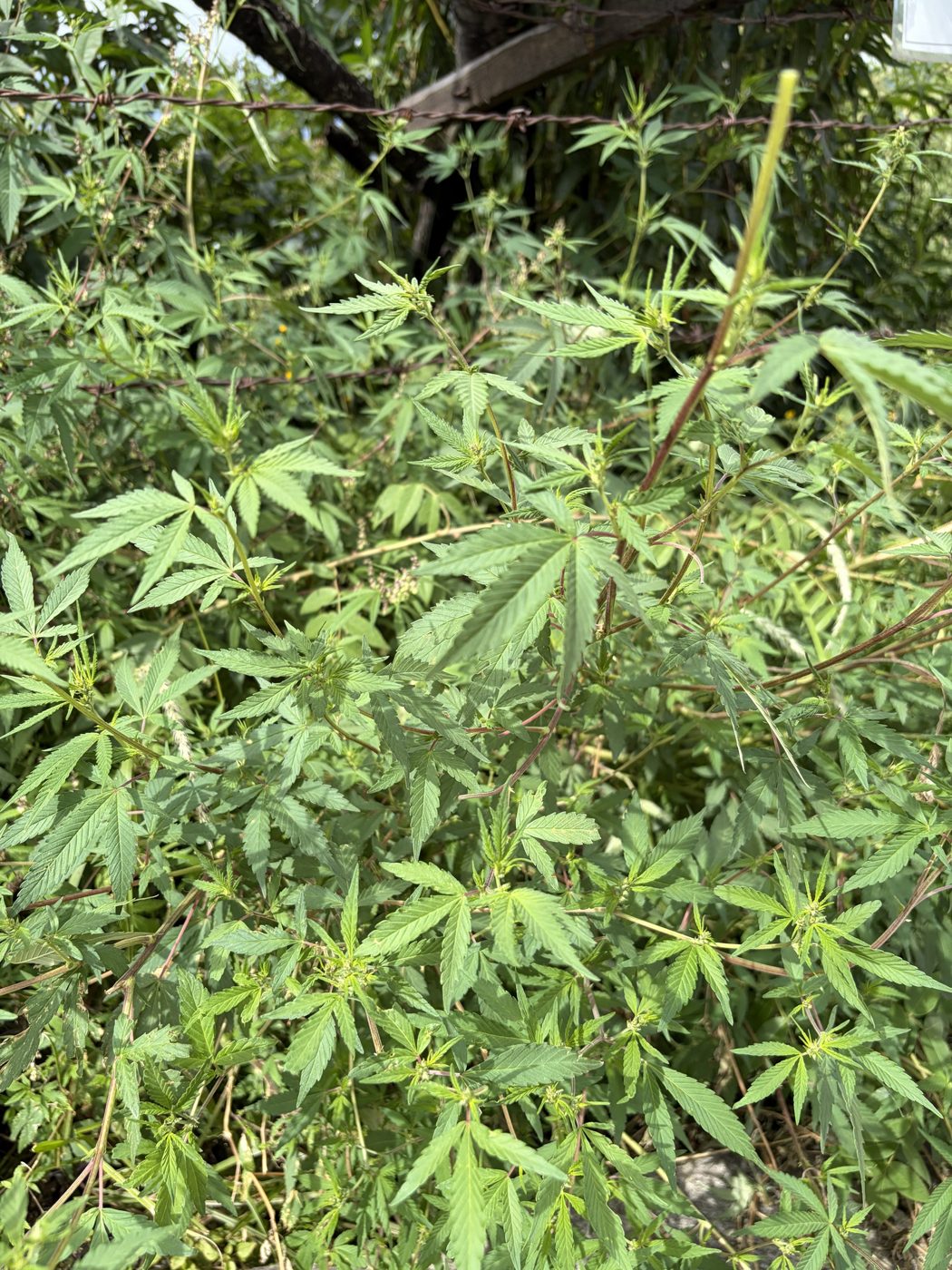
You notice it soon enough: the hand-shaped, serrated leaves along roads, fences, streams and forest edges. In Bhutan cannabis grows wild everywhere, like a weed. Traditionally it was used as pig feed and sometimes for fibre, and nobody planted it: it just grows.
- Yet everything to do with it is illegal. Harvesting, possession, use and sale all fall under the narcotics law (the Narcotic Drugs, Psychotropic Substances and Substance Abuse Act of 2015). Penalties run from several years in prison for small amounts to much heavier for dealing. The figure you heard, up to five years, sits within that range; sources give varying numbers and the law has been amended, so assume serious consequences.
- It happens anyway. As we were told, some young people go into the forest to gather the plant and use it with tobacco. That makes it no tourist curiosity but something the police take seriously.
- As a visitor, don't touch it. Don't pick it, don't take it, don't accept it from anyone who offers it, and no photos of yourself with it. Bhutan checks strictly, including at Paro airport, and there is no leniency for foreigners.
Bhutan · animals in the street
Cows on the road, dogs on every pavement, a horse grazing between the houses. Nobody looks twice — except us.
Why they're just there
- Killing is a sensitive matter. In Bhutanese Buddhism every animal is a being on its way to rebirth, and chasing one off, having it put down or locking it up weighs heavily on your karma. A stray isn't cleared away; it's simply part of the place.
- The cows usually belong to someone. They're owned by nearby farmers and graze freely along roads and through villages by day; in the evening many walk home on their own. Fences are expensive, roadside grass is free.
- Some animals have been ‘bought free’. In tsethar, the saving of life, believers buy an animal headed for slaughter and release it, which earns great merit. That cow or goat may never be slaughtered afterwards, and often wears a coloured ribbon, a bell or an ear tag.
- Horses and mules are working animals. In the mountains they're still the lorry to places with no road. Between trips they're left to graze wherever there's grass — town included.
- The dogs belong to everyone. Bhutan has tens of thousands of free-roaming dogs. People give them scraps, monks feed them at the temples, and they sleep through the day in the middle of the square. In 2023 Bhutan became the first country to sterilise and vaccinate all its free-roaming dogs; a notch in the ear means a dog has been done.
How to deal with them
- Cows have right of way. Drivers stop or crawl round them, and that's normal. Don't walk right behind a cow or horse, and never step between a cow and her calf.
- Leave the dogs alone. Most are calm and sleepy, but they aren't pets. Don't stroke them, don't feed them, don't run when one barks — just keep walking calmly. They're most territorial at night and in packs.
- Bring earplugs. The dogs sleep by day and defend their street by night. A barking chorus at three in the morning comes with every hotel room in Bhutan.
- Bitten or scratched? Rabies is rarer than it was but not gone, especially in the south. Wash the wound straight away with soap and water for fifteen minutes and get to a hospital or BHU (Basic Health Unit) the same day for a vaccine, even if you've been vaccinated. Your guide will know where.
- High in the mountains they turn into yaks, which are a lot bigger than they look in photos. On a narrow path, step to the uphill side and let them pass.
A few words
Nepali
- Namaste / Namaskar
- Hello, goodbye, respect
- Dhanyabad
- Thank you
- Kati ho?
- How much is it?
- Mahango bhayo
- That's expensive
- Mitho chha
- It's delicious
- Pugyo
- Enough — crucial at dal bhat refills
- Pani
- Water
- Bistarai
- Slowly — the trekking mantra
- Ramro chha
- It's beautiful
- Maaph garnuhos
- Sorry / excuse me
Dzongkha
- Kuzuzangpo la
- Hello — the la is the politeness
- Kadrin chhe la
- Thank you
- Log jay gay
- Goodbye
- Ga de be yoe?
- How are you?
- Legshom be
- Very good
- Zhim be
- Delicious
- Ing / Mindu
- Yes / no, there isn't any
- Chhu
- Water
- Tashi delek
- Good fortune, blessings
Adding la to the end of almost anything in Dzongkha makes it polite. Use it liberally and your guide will grin.
The two countries feel very different, and it is worth naming why. Nepal is loud, chaotic, poor, extraordinarily warm and completely open to you — you go where you like and nobody is managing your experience. Bhutan is quiet, ordered, carefully curated, and you see it through a guide. Neither is more authentic. Take Nepal's chaos as generosity and Bhutan's control as care, and you get the best of both.